The History of Radio Mutation
The network ran as GaragePunk Pirate Radio from 2005, took the Radio Mutation name in 2015 and stopped in 2019. What it was, and where the audio went.
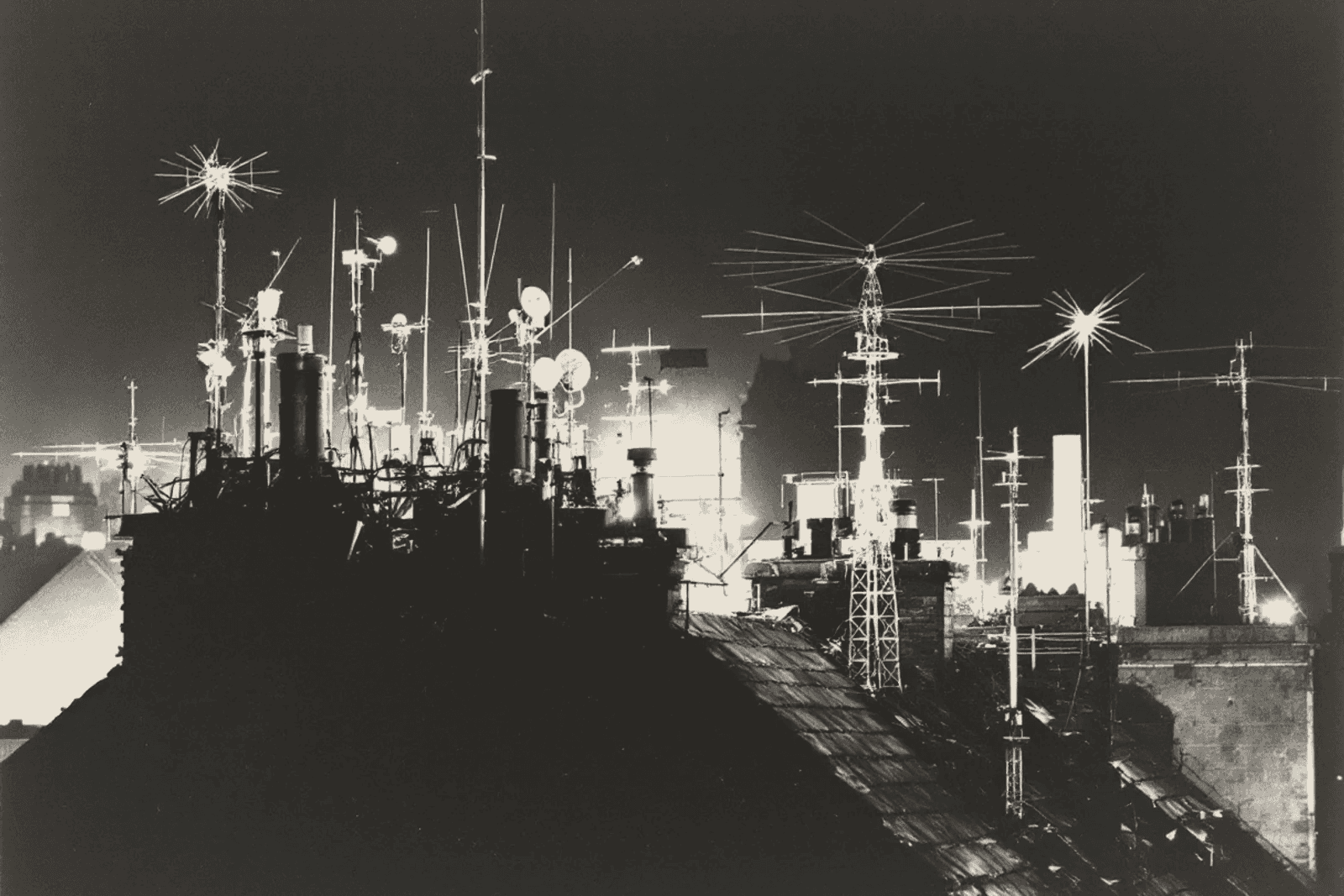
For its first ten years this network was not called Radio Mutation. It was GaragePunk Pirate Radio, it started in 2005, and it grew out of a message board. The name it is remembered by arrived in 2015, and the domain it is remembered at arrived later still.
That distinction is the whole reason this page exists in the shape it does. radiomutation.com has exactly two Wayback captures before 2016, both from 2004, both of an unrelated frames-based placeholder with nothing to do with any of this. Then nothing until 22 April 2016, the first capture of the domain as the network’s home. Episode addresses here run back to 2005 because the archive travelled with the project when it renamed. The posts are older than the domain’s tenure.
What follows is documentation from the public record. It is reconstruction, not memory — see the Lost Network index for how the sources work and where they run out.
GaragePunk Pirate Radio, 2005–2015
The network’s own About text put its origins in a single line: “Formerly known as GaragePunk Pirate Radio (2005–2015) and born of the original GaragePunk Forums message board at GaragePunk.com.”
A forum explains the shape the thing took. GaragePunk.com already had a population of
people arguing about records, and some of them made shows. The network was somewhere to put
the shows, not a station that commissioned them. The old name stayed stuck to the files
afterwards: recovered audio items from the period carry gppr identifiers, and the home
page as captured in 2016 was still serving a logo called GPPR2.png after the rename.
Where the name came from
Also from the About text, and the best single sentence we have recovered about what the project thought it was doing: “As podcasting is a sort of mutation of radio broadcasting, our programs feature mutations of rock ‘n’ roll that are largely ignored by the mainstream.”
Two mutations, one word. The genre list attached to it was wider than ours: garage rock, punk, surf and instro, rockabilly, primitive R&B, power pop, swamp rock, proto-punk, post-punk, psychedelic rock and broken blues, or in their own summary “basically all styles of gritty, desperate, REAL rock ‘n’ roll”. The centre of it, though, is garage punk — the network had spent ten years named after the genre, and the shows kept returning to it.
What the network was
Syndication rather than production. Individual hosts made their own shows, kept their own names and their own identities, and the network carried them. At its height the roster ran to more than thirty programmes.
The captures show the range. MRR Radio, the radio arm of the punk fanzine Maximum Rocknroll, appears with episode numbers between #1510 and #1657, a count that had been climbing for decades before it reached this site. The House of Wild Delights ran roughly every other month across nine years.
The recruitment page was unusually specific about what it wanted:
We also prefer actual DJ-hosted shows with announcement breaks, soundbites, and other audio weirdness dropped in between the songs rather than mixtape-style shows with little or no personality.
It then named its lineage: Alan Freed, Dick Biondi, Mad Mike Metrovich, Wolfman Jack, Murray the K, the British pirate stations of the 1960s, the television horror hosts Vampira, Zacherley and Ghoulardi, and more recent oddities including Lux Interior’s Purple Knif Show and Dave the Spazz on WFMU.
That is a demanding brief, and it is why the archive holds together as more than a directory. These were radio shows made by people who wanted to talk between the records.
No money, and no promotion
The About page was flat about the economics: “All of our shows are low-budget productions, independently produced and non-commercial (that means we make no money whatsoever from this endeavor).” The same page invited readers to become supporters, so read that as no revenue from the shows rather than as no money ever changing hands.
It was also quiet on purpose: “We purposely fly under the radar. We do minimal promotion (limited mainly to our social media accounts) with the understanding that those who want to find us, will.”
Those two lines change how the ending reads. This was not a business that failed. It was a volunteer project, run for fourteen years by people who were not paid and were not trying to grow, and eventually it stopped.
The shows
Thirty-three shows have at least one episode page we could recover. Forty-eight are identifiable in total, counting the ones named on the site whose episode pages never survived a capture. The largest by surviving episode count were Record Roulette Club, The Mal Thursday Show, The Savage Kick, The House of Wild Delights, MRR Radio and It’s Trash!, each documented on a page of its own.
Behind them ran dozens more: Mottey’s Garage, Retro Obscuro, Earache Radio, Phantom Creep Radio, Rock & Roll Rampage, Rock and Roll Dance Party, GaragePunk Surfcast, Bubblegum Fuzz, Smashin’ Transistors, Shout Bamalama!, Way Past Cool, Cut X Cut, The Novel Sound, Destroy All Music, Savage Damage, Shadows In The Void, Apocalypstick, Fifty-Four Forty or Fight!, Kustom City Sounds, Life in the Future, Voix de Garage, Carburetor Dung, Sounds Like Crime, Stop and Listen and Get Weird.
The roster turned over constantly. A show would run two or three years, accumulate thirty or forty episodes, and stop; another took its slot. A handful outlasted everything around them. The line-up in 2009 and the line-up in 2018 barely overlap, which is why no single snapshot of the site gives an accurate picture of the network.
Posting thins through the first half of 2019: 23 episode pages in January, 15 in February, 16 in March, 14 in April, 11 in May, three in June, two in July. The last one is dated 27 July 2019.
How it was published
WordPress, for the stretch we can see. Episodes were dated posts (/2018/02/13/shock-therapy-5/
is a typical address) and each show had a category page collecting its run. There were
pages for submitting music, for subscribing to the feed, for recruiting new hosts, and a
links page pointing at labels, record shops, blogs and other radio shows.
The submissions page dates itself precisely: “Please do NOT email us your songs. Email sucks.” It asked for MP3s rather than WAVs and pointed bands at the Free Music Archive and other podsafe libraries.
What happened next
The network wound down through 2019 and the domain lapsed after that. Neither event took the audio with it, because the audio was never here. Radio Mutation announced shows; the hosts hosted them. Their files sat on their own servers and services, and a great deal of that is still standing. The House of Wild Delights has 42 episodes on the Internet Archive. Big Enchilada has 16 there, It’s Trash! has 7, and Record Roulette Club’s files are on the Archive too, behind a Blubrry address. All 47 of The Savage Kick’s point at the host’s own site. MRR Radio’s went to Maximum Rocknroll’s own server, The Mal Thursday Show’s to a Podomatic account. Mixcloud turns up eleven times in the captured episode text, which puts it in this world without making it where most hosts ended up. The audio is spread across a dozen destinations. None of them is this domain.
In 2022 the domain was registered by someone else and used for gambling spam in Indonesian, visible in the archive as a couple of dozen pages that have nothing to do with any of this. Those pages are gone and will not be restored.
Why document it at all
Because the links are still there. Record labels, music blogs and podcast directories linked to specific episodes on this domain, and those references have been pointing at nothing for years. Bandcamp pages for at least one label in the network’s orbit still carry the address.
Rebuilding the pages as honest documentation seemed better than either leaving them dead or faking a continuation. We host no audio, and the show notes and on-air introductions the hosts wrote are theirs rather than ours to reprint. The artwork is the exception: each show page carries that show’s own cover, captioned as the show’s, because a network nobody can hear should at least be visible. Rights in it never moved.
If you were part of this and something here is wrong, tell us. If one of those covers is yours and you want it down, the same address does that, and you do not have to argue the case. If you make this kind of music now, send it to us — which is, more or less, how a message board full of record obsessives turned into a radio network in the first place.
Frequently asked questions
- What was GaragePunk Pirate Radio?
- The same network, under its first name. Its own About text says it was formerly known as GaragePunk Pirate Radio from 2005 to 2015, and that it was born of the original GaragePunk Forums message board at GaragePunk.com. It took the Radio Mutation name in 2015 and kept running until 2019.
- Did radiomutation.com carry the network from 2005?
- No. The Wayback Machine has two captures of this domain before 2016, both from 2004, and both of an unrelated placeholder page. The first capture of the domain as the network's home is 22 April 2016. Episode addresses here reach back to 2005 because the archive moved with the project when it renamed.
- Is this site the original Radio Mutation?
- No. The domain lapsed and was registered again by the present owner. This site is independently owned and is not affiliated with the network's original operators, hosts or contributors. It documents the project rather than continuing it.
- Where can I hear the original episodes?
- Not here. We do not host the original audio, because we have no right to. Most of it was never on this domain: hosts kept their own files, and a lot of those are still up, on the Internet Archive, on hosts' own sites and on podcast services. The show pages here say where each run lives.
- How do you know what was on the site?
- From dated captures held by the Internet Archive's Wayback Machine. Roughly six thousand captures of radiomutation.com survive, covering about 1,470 distinct addresses between 2004 and 2024, and the show and episode listings on this site are reconstructed from them.
- I hosted one of these shows. Can I have a page changed?
- Yes. Write to us and tell us what you want corrected, credited differently, expanded or taken down. We will act on it without argument.