The History of Garage Punk
The history of garage punk from a botched 1963 session in Portland through Nuggets, 1977, the 80s revival, Crypt and Estrus, to bands pressing 300 copies now.
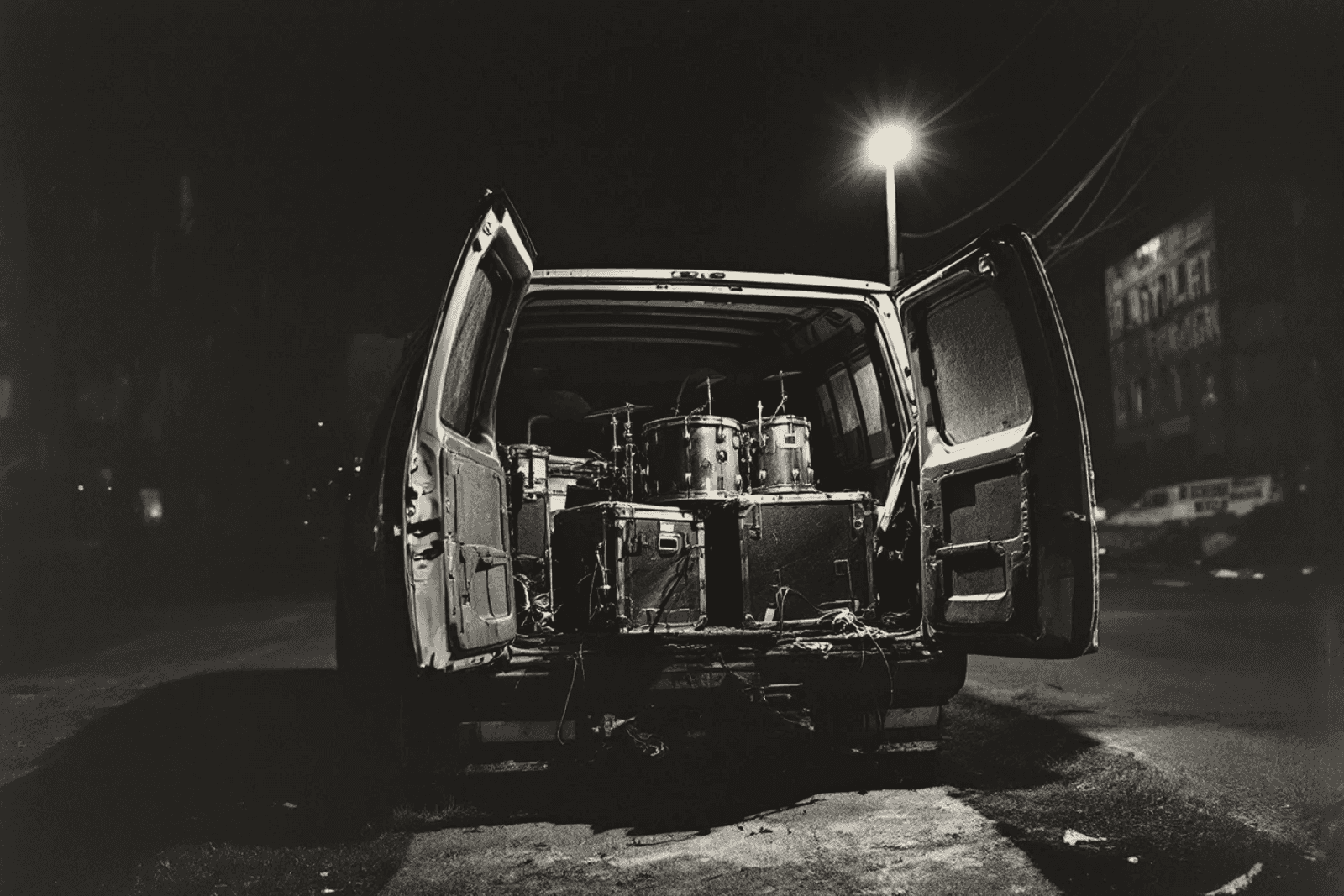
Garage punk has been invented at least four times, always by people convinced they were first. That is the actual shape of the history, and it beats the straight line most accounts try to draw.
Start with the accident. In 1963 the Kingsmen booked an hour in a Portland studio and cut Richard Berry’s “Louie Louie” with their singer straining up at a boom microphone hung too high for him. The take is a shambles. Somebody comes back in early after the break. The vocal is so unintelligible that the FBI eventually spent close to two years analysing it for obscenity and concluded it could not make out the words at any speed. It was a hit anyway, and every teenager in America drew the correct lesson: the barrier to entry is one afternoon and three chords played slightly wrong.
1963 to 1968: the thousands
What followed is the largest amateur recording boom in American history. Thousands of bands, one single each, a local label, a regional hit if they were lucky, then somebody’s father said get a job.
The good ones are very good. The Sonics in Tacoma, cut by Kearney Barton for the Wailers’ own Etiquette label, remain the hardest-hitting thing anyone made in the decade. Gerry Roslie sings “Strychnine” like the drink had personally wronged him. In Austin, the 13th Floor Elevators put an amplified jug on the record and Roky Erickson opened “You’re Gonna Miss Me” with a scream that has never been improved on. In London, Dave Davies slashed a speaker cone with a razor blade and “You Really Got Me” gave a generation of Americans their marching orders.
None of these people thought they were making a genre. They thought they were making a hit. The genre is what the survivors were sorted into later.
1972: the word arrives before the bands
Lenny Kaye assembled Nuggets for Elektra in 1972, twenty-seven American singles from 1965 to 1968, most of them by bands nobody remembered. It is the most consequential compilation in this music, because it converted a pile of forgotten regional flops into a canon with a name. The word attached to it was punk.
Read that date again. Punk was already in print describing the Standells and the Seeds before the Ramones had played a show. The bands who took the name in 1976 were borrowing a term that reissue nerds had already fixed to their older siblings’ 45s. The Pebbles series followed at the end of the 1970s and dug considerably deeper and rougher. If you want the argument about which word applies to what, we took a whole piece to have it: garage punk vs garage rock.
1977: the family resemblance
The first punk wave is not a break in this story. The Ramones played faster than any 60s band and wrote shorter songs, but the method is identical: refuse to improve, keep the take, get out. The Saints in Brisbane made “(I’m) Stranded” in near-total isolation from anything. The Real Kids in Boston were essentially a 1965 band with better amps.
The archive we maintain makes this continuity measurable rather than rhetorical. Across sixteen underground radio shows we counted, the single artist played by the most separate hosts is not a garage band at all. It is the Ramones, in nine shows out of sixteen, with the Sonics next at seven. The same hosts, the same hours, no discussion between them.
The 1980s: the revival that built the plumbing
The decade everyone skips is the one that made the rest possible. The Cramps got there first, formed in New York in 1976 with no bass player and a record collection of rockabilly obscurities, then went to Memphis to make Songs the Lord Taught Us with Alex Chilton producing. Boston had the Lyres and Jeff Conolly’s Vox organ. Queens had the Fleshtones. Rochester had the Chesterfield Kings, who took the costume part extremely seriously. Portland had the Miracle Workers, still the only 1980s revival band that turns up in our consensus count, played by five different shows.
In Medway, Billy Childish began a run of bands and records that has not stopped since and that nobody has ever fully catalogued. In Detroit, the Gories formed in 1986 with two guitars, no bass and a drummer who played standing up, then got Chilton to produce them too. And in Clackamas, Oregon, Fred and Toody Cole started Dead Moon and cut their own masters on a mono lathe Fred owned, the one that had done “Louie Louie” if you believe the story, which everyone in this world does.
Then Tim Warren started Crypt Records and the Back from the Grave volumes from 1983, which is where the 1960s canon got rougher, meaner and considerably less psychedelic than Nuggets had made it look.
Crypt, Estrus and the 1990s
The 1990s is when the infrastructure became a scene. Crypt stopped reissuing and started signing: Teengenerate from Tokyo, the Devil Dogs from New York, the Oblivians from Memphis. Estrus ran out of Bellingham, Washington, under Dave Crider of the Mono Men, with sleeve art you could identify across a room. Norton in Brooklyn kept the 1950s and 60s side alive. Get Hip in Pittsburgh, Sympathy for the Record Industry in California, In the Red from 1991, Goner in Memphis from 1993.
The bands got more extreme as the recordings got worse on purpose. The Mummies played in bandages, refused to release CDs and called it budget rock, which is the most honest genre name anyone has come up with. The Oblivians used three players who all sang, all played guitar, took turns on the drums and used no bass at all. Guitar Wolf in Japan pushed the distortion past the point where you can identify individual instruments.
This is the decade that fixed the aesthetic: rough is a decision, not a limitation. That principle is the whole subject of what garage punk is.
After 2000
The 2000s brought the only period when this music was briefly a mainstream concern, and the story of what that did and did not change is its own piece: the garage rock revival.
What matters here is that the underground was not waiting for it and did not stop when it ended. The most-played artists across our whole archive are not the canon. Liquids and Neo Neos top the count at 26 plays each, with Erik Nervous, Sick Thoughts and Suburban Homes not far behind, and all of them are recent. Sixteen hosts had the entire history available and spent most of their heaviest rotation on bands who had pressed a few hundred copies. Read that as the health check it is.
Where to start
Chronologically, and it takes about a fortnight: Here Are the Sonics, then Nuggets, then the first Ramones album, then anything by the Gories, then Popular Favorites by the Oblivians. If you want the sound of the same decade going in a different direction, how surf rock got its sound covers the instrumental branch of the same family.
For who to hear rather than when, we ranked it by evidence in the best garage punk bands. The counts behind all of it come from our archive, which is documentation rebuilt from Internet Archive captures of a network that no longer runs. This site is independently owned and not affiliated with that network, its hosts or its contributors.
Frequently asked questions
- When did garage punk start?
- There is no clean start date. The records people mean by garage punk begin around 1963 with American teenagers copying British beat groups badly, but the label was applied retroactively in the early 1970s by reissue compilers, and the sound has been made continuously ever since. Anyone who gives you a single year is selling a tidy story.
- Where did the term punk rock come from?
- It was in print for 1960s bands before the 1970s punk groups recorded anything. American rock critics were using it around 1970 and 1971, and Lenny Kaye's notes for the 1972 compilation Nuggets are the most-cited instance. The 1976 bands adopted a word already attached to their older siblings' 45s.
- Which labels built garage punk?
- For the 1960s originals, small regional imprints like Etiquette in Tacoma and International Artists in Texas. For the reissues that created the canon, Elektra's Nuggets and then Crypt's Back from the Grave. For the living thing: Crypt, Estrus, Norton, Get Hip, Sympathy for the Record Industry, In the Red and Goner.