How Surf Rock Got Its Sound
Spring reverb, heavy strings, tremolo and a dangerously loud Fender: how surf guitar got its wet tone, and which parts of the story are myth.
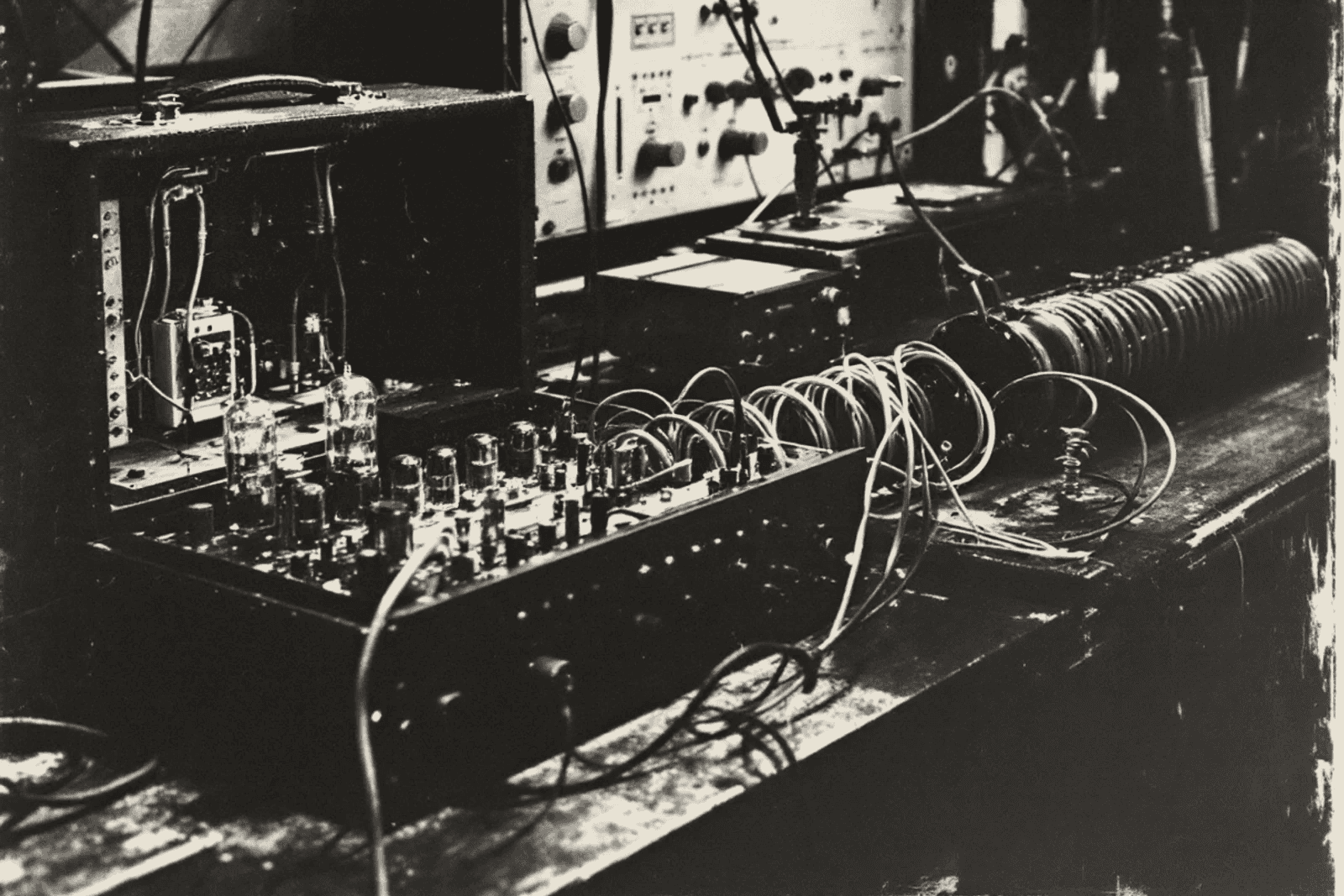
Surf guitar is four decisions and three of them are physical objects you could put on a table. A box of springs, a set of strings heavy enough to be a nuisance, an amplifier built past the point of sense, and a right hand that never stops moving. Everything described as the surf sound comes out of those four things arguing with each other in a big empty room.
Which is good news, because it means the sound is learnable rather than mystical. It also means most people chasing it buy the wrong part first.
The box of springs
Fender’s Reverb Unit arrived in 1961 as a separate box, not a feature. It sat on top of the amp, ran its own valves, and drove a mechanical tank of springs whose job was to smear the signal into a wash and hand it back. Three controls: dwell, mixer, tone. Dwell decides how hard the springs get hit, mixer decides how much of the wet signal you hear, and the settings that produce what players call drip are unsubtle at both.
From 1963 Fender started building reverb into the amplifiers, and that is roughly where surf’s classic tone got standardised and slightly tamed. The outboard unit remains the more extreme device. Because the tank is mechanical, it can also be played: knock the box and it crashes like sheet metal. Records from the period use that, and no digital reverb has ever done it convincingly, which is why the pedals people take seriously are the ones modelling the physics rather than the ambience.
One thing worth being clear about. Reverb is not decoration on top of a finished part. Strip it off a surf record and the guitar line underneath is usually very simple. The effect is part of the composition, in the same way distortion is part of a Ramones song rather than a coat of paint applied to it.
Strings you have to fight
The first wave played heavy gauges, often flatwound. Dick Dale’s sets are legendary and the exact numbers change depending on who is telling the story, so we will not pretend to quote them. What is not in dispute is the principle: mass makes the tone.
Heavy strings stay in tune under aggressive picking, resist going sharp when you hit them hard, and give the low string enough weight to carry a melody without help. They also make fast alternate picking a physical event rather than a wrist flick. Dale was left-handed and played a right-handed guitar upside down without reordering the strings, so his low string sat where a treble string normally does. That is not trivia. It shaped what he played.
The right hand is the part nobody buys and everybody skips. The double-picked run, the trill on one note held past the point of comfort, the glissando dragged down the low string until it turns into noise. Those are technique, not equipment, and they are why a beginner with the correct pedal still does not sound like this.
The tremolo Fender called vibrato
The names are wrong and have been since the start. The circuit in a Fender amp labelled vibrato modulates volume, which is tremolo. The bridge assembly on a Stratocaster labelled synchronized tremolo modulates pitch, which is vibrato. Leo Fender got both backwards, the industry copied him, and the errors are now the standard vocabulary.
What matters is the effect. Amp tremolo chopping at speed under a held chord gives surf its seasick shimmer, and the floating bridges on the offset guitars let a player wobble a chord at the end of a phrase without dropping it out of tune, provided the bridge is behaving.
The guitars, and why they look like that
The Stratocaster was already there. Then Fender introduced the Jazzmaster in 1958, aimed squarely at jazz players who ignored it, and the Jaguar in 1962 with a shorter scale and even more switches. Teenagers in California bought both. The offset body, the floating tremolo, the bright single coils and the slightly loose feel of a short scale suited music that lived on the top end and needed the tremolo arm constantly.
The gear is not a rule. Plenty of great surf was cut on hollow bodies and on whatever a band could afford. But the Jazzmaster and Jaguar became the visual shorthand for the genre because the surf bands adopted the guitars that jazz players had rejected.
Loud enough to break things
Dick Dale played the Rendezvous Ballroom in Balboa, a room too big for the amplifiers of 1961, and his working relationship with Leo Fender came out of that problem. The result was the Showman line and 15-inch JBL speakers built to survive the punishment.
The tale of how many amplifiers or speakers Dale destroyed along the way arrives with a different number every time it is told, so treat the count as folklore. What is documented is the direction of travel: the room demanded more volume than existing equipment produced, and the equipment got rebuilt until it kept up. Loudness was an arrangement decision here before it was one in metal.
The parts you cannot buy
Two, and they matter more than any of the above.
The first is that no singer means the melody has to be genuinely good. A weak vocal song can be rescued by a performance. A weak instrumental is just weak. Our test for whether a surf band is any good is to hum what they wrote after one listen, and most modern ones fail it. That is not a gear problem.
The second is the drummer. Surf drumming pushes rather than keeps time, all driving snare and tom fills that would be considered overplaying anywhere else, and a band whose drummer is polite about it sounds like a hobby. Listen to what the Surfaris and the Chantays have going on underneath the guitars, then listen to how flat most reverb-heavy revival records are.
If you want the sound now, our order of priority runs: right hand, then strings, then a real spring tank, then everything else. It is the reverse of the order most people spend money in.
The records that show all this working are in the best surf rock songs, and the wider question of what this music is and where it came from sits on the surf rock hub. For what happened when a later generation picked the same equipment up on purpose, see surf rock’s second life.
Guitarists arriving from the noisier neighbours will notice this is the exact opposite approach to fidelity from the one taken by the bands in garage punk versus garage rock, where the point is to bury the playing rather than expose it.
Frequently asked questions
- What effect makes surf guitar sound wet?
- Spring reverb, usually from Fender's outboard Reverb Unit of 1961: a valve-driven box of springs that sat on top of the amp. Digital reverb does not behave the same way, which is why the pedals that try hardest are the ones modelling a physical tank.
- Do you need heavy strings to play surf?
- Not to play the notes, but the tone comes largely from mass. Light strings under fast alternate picking sound thin and go sharp. Flatwounds and a heavy set are doing more of the work than most players expect.
- Why does Fender call tremolo vibrato?
- Because Leo Fender labelled them backwards and nobody corrected it in time. The circuit in the amp marked vibrato modulates volume, which is tremolo. The bridge marked synchronized tremolo changes pitch, which is vibrato. Sixty years on, the wrong names are the standard ones.